Have questions or want to report an issue? Email radar@bostonartreview.com

Through Jan 18, 2027
The Book of Esther in the Age of Rembrandt
Isabella Stewart Gardner Museum
25 Evans Way, Boston, MA 02115
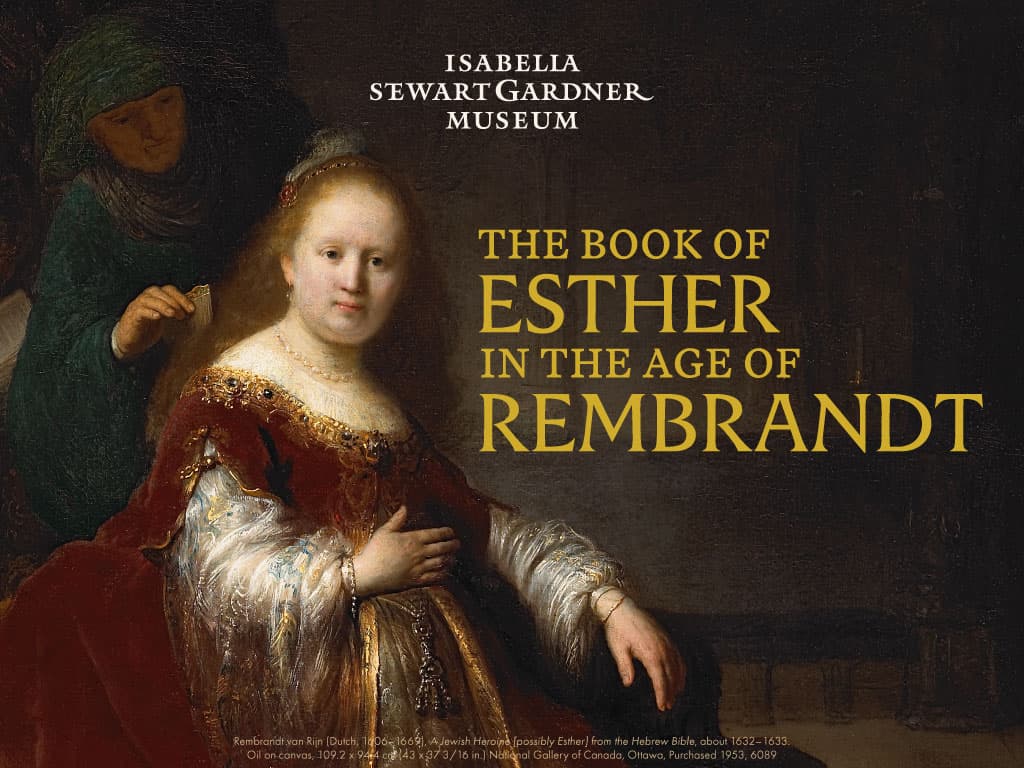
The biblical book of Esther, read annually on the Jewish holiday of Purim, tells the story of an orphan who became a queen. As the new wife of Persian monarch Ahasuerus, Esther hid her Jewish identity until, risking her life, she revealed it to the king in order to save her people from destruction. But how did an ancient Jewish heroine become a symbol of national identity in the Christian Netherlands of the 1600s?
Home to Rembrandt van Rijn (1606–1669), as well as Jewish immigrants who were his neighbors and models, the Netherlands offered Jewish communities relative tolerance in freedom of worship. Dutch Protestants saw in Esther a mirror of themselves in their fight for independence from Catholic Spain; her triumphant story became an intriguing and repeated subject for artists of the period.
Through a dazzling array of paintings, tapestries, decorative arts, as well as Persian textiles and Jewish ceremonial objects, The Book of Esther in the Age of Rembrandt invites us into a fascinating moment in the long visual history of a heroine whose courage has inspired people across time.