Have questions or want to report an issue? Email radar@bostonartreview.com

Through Mar 29, 2026
Virgilijs Tilks: , or , (Center Gallery)
Kingston Gallery
450 Harrison Avenue suite 43, Boston, MA 02118
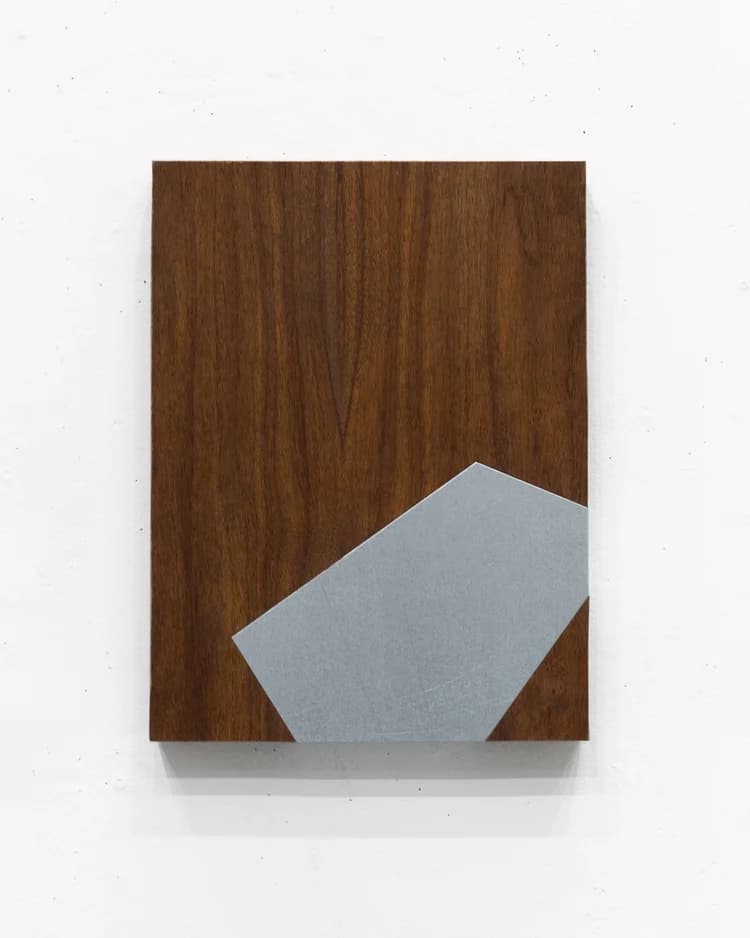
Picture an object with no fixed form or name. When this un-object moves, does it displace the surrounding lines, or does it pass through them without interruption? If it does create a push, does that make it an object, simply because its limits are momentarily defined by what surrounds it? Or does a space remain where its outline is still unknown?
When time is present, outlines appear less as lines and more as gradients. Borders shift according to context, much like personal boundaries do. Perhaps it is not the borders themselves that distinguish an un-object from an object, but the moment in which those borders are perceived — the point at which “enough is enough,” only ever legible because “never enough” is already present. The threshold between these conditions is not fixed. It emerges through perspective, in the moment when the object senses a line and temporarily decides between “now” and “never.”
Once borders are fixed, the un-object becomes an object through form. Stability appears, along with the expectation of coherence. Yet an object does not always remain one. When it refuses to settle, the line between belonging and otherness begins to blur. The boundary softens, but the un-object persists. Movement disrupts the surrounding field. Boundaries dissolve and reappear elsewhere, no longer attached to a single form. Belonging and otherness are not stable states, but outcomes of this disruption — temporary positions shaped by proximity, motion, and attention.
Is it possible for the un-object and the object to coexist without collapsing into one another? If protection requires definition and enclosure, then the un-object cannot be protected without being destroyed. To protect it is to fix its border but to fix its borders is to undo the conditions that allow it to exist. Within overlap, borders do not harden into lines. They remain gradients. Here, care does not stabilize form, but allows permeability.