Have questions or want to report an issue? Email radar@bostonartreview.com

Dec 17, 2026 – Apr 11, 2027
List Projects 36: Will Stovall
MIT List Visual Arts Center
20 Ames Street, Cambridge, MA
Featured Artists
- Will Stovall
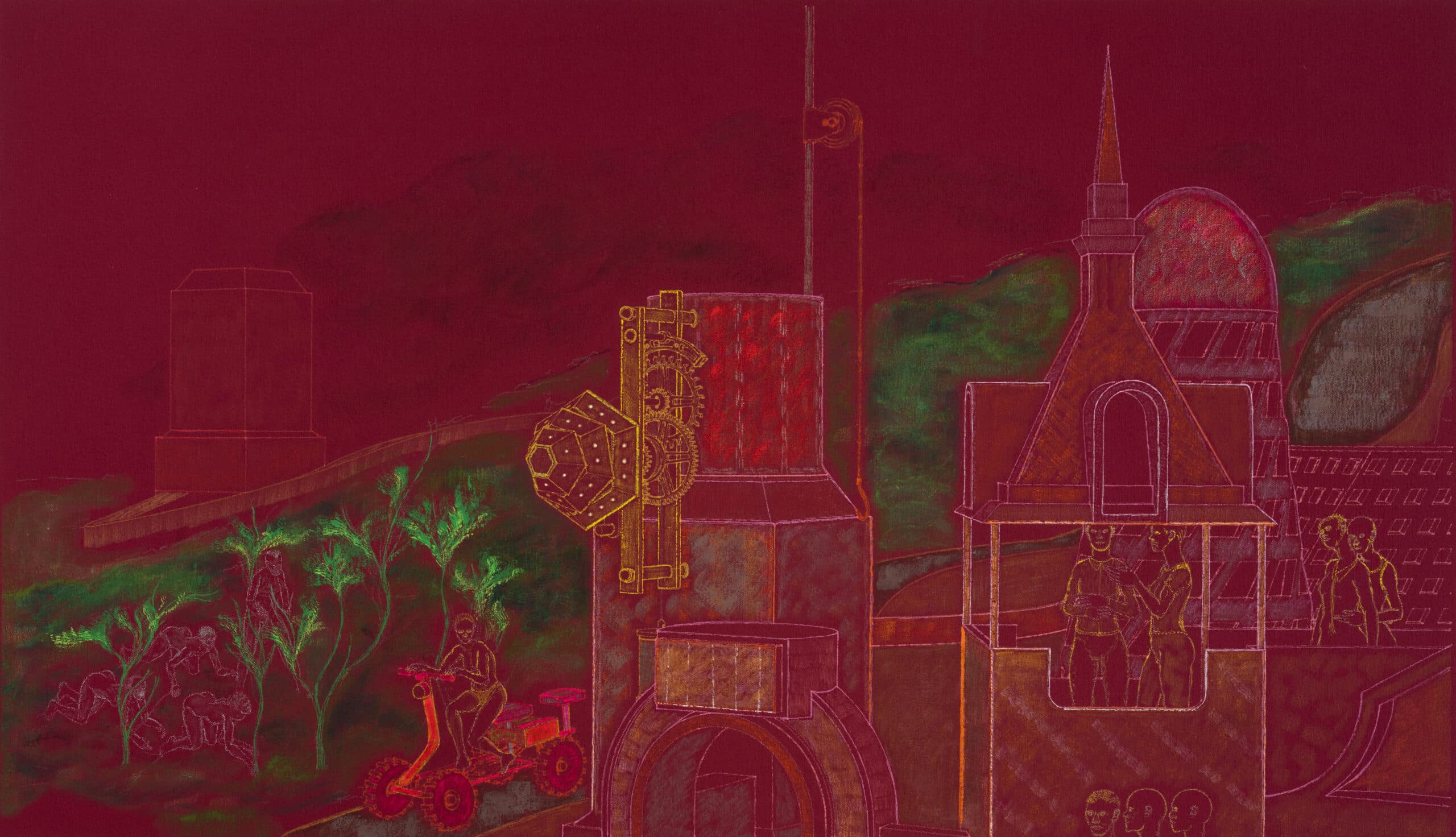
Will Stovall’s figurative paintings take up philosophical questions about perception, civic order, and the role images play in how we understand the world.
He draws on the twentieth-century German philosopher Hans Blumenberg, whose “metaphorology” traces the deep-seated metaphors (describing truth as light or the world as a book, for example) that shape our thinking before and beyond reasoned argument. Working in what he calls a “metaphorological” mode, Stovall uses painting to make visible these inherited pictures that operate in the background of thought.
For List Projects 36, Stovall presents new paintings on canvas and machined aluminum built around one such metaphor: machina mundi, Latin for “world machine”. The phrase dates back to antiquity, and by the seventeenth century had come to describe the world as a vast mechanical clock, an orderly system that could be measured and calculated but never seen or felt as a whole. This image marked a historical shift in which the world’s order was cast into the realm of calculation rather than revealed through sense experience.
From industrial mechanisms to intelligent devices, machines run through the exhibition, both as subjects and as the physical workings of the artworks themselves. Situated in an industrial past, Clock Watchers (2026) depicts a gear structure that regulates the rhythms of daily life in the dense city surrounding it. The structures in Archipelago (2026), on the other hand, emerge from an unknown future, as a high-speed railway circles speculative architecture. The kinetic painting Tower (2026) builds the clockwork metaphor into its substrate. Its three nested aluminum columns, each painted with figures moving through buildings, rotate at different speeds when cranked from below, and return to their original alignment only after roughly forty hours of continuous turning—far longer than any visitor could observe.
Spread throughout cities old and new, Stovall’s machines don’t exist in isolation;