Have questions or want to report an issue? Email radar@bostonartreview.com

Through Jun 29, 2026
Contemporary Queer: Abundance
Gallery 263
263 Pearl Street, Cambridge, MA
Featured Artists
- Amanda Pickler, Anna Fischler, Bailey Triggs, Brian Christopher Glaser, Chris Tavares, Coyote Park, Daniel Roa, Frankie Pittorf, Forrest Wilson, Gray Winburne, Hogan Seidel, Joseph Barretto, Juno Soleil Vieira, Laicee Blackwell, Loring Taoka, Lyric Johnson, Melissa Wilkinson, Michelle Schapiro, Nathan Hosmer-Nevarez, Rowan Raskin, Sadie Malks, Tyler Sorgman
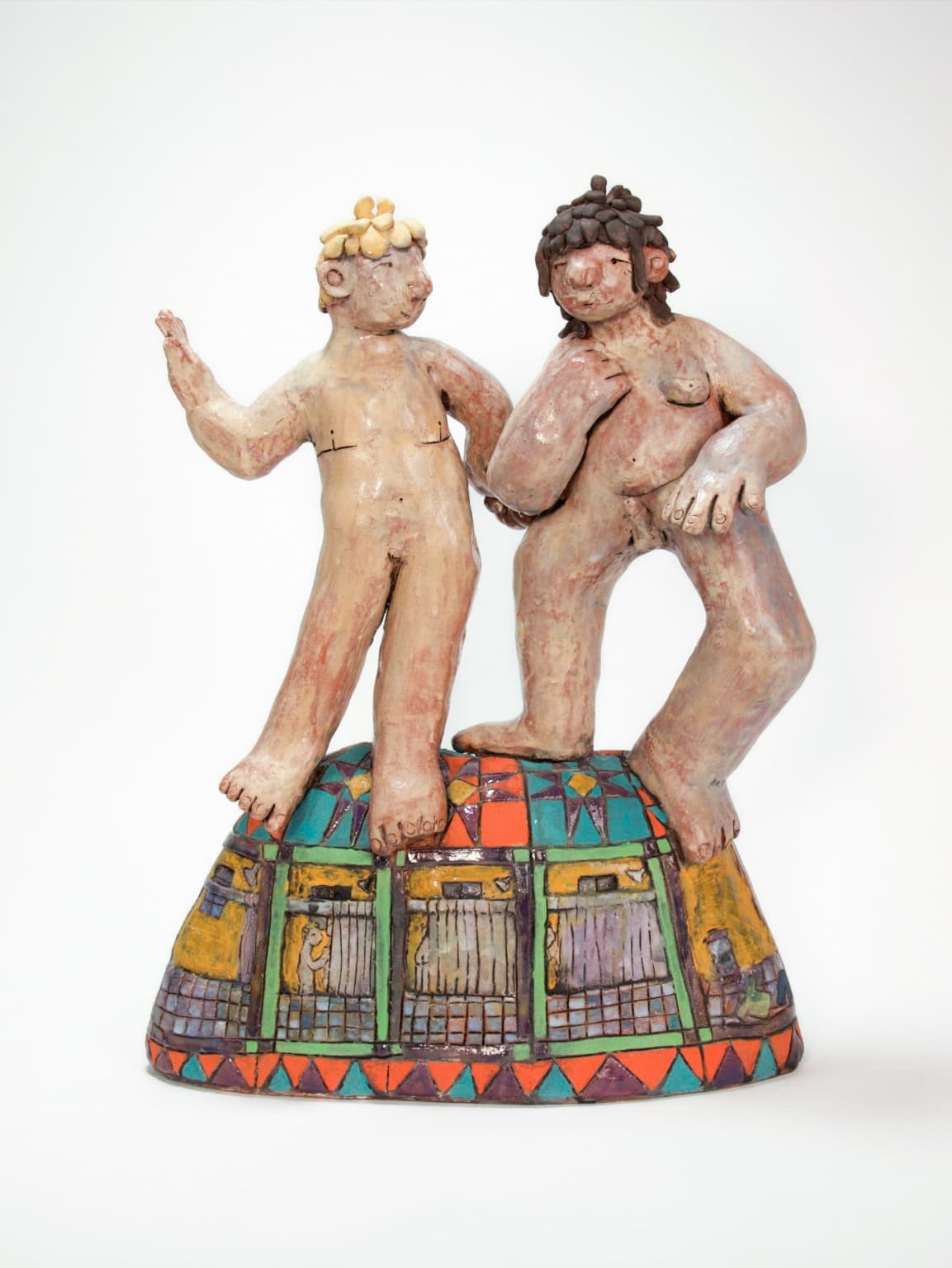
Contemporary Queer: Abundance is an exhibition of 22 artists whose aesthetic and conceptual practices guide us toward the vastness of the queer experience. In a world weighed down by state-sanctioned violence and a heteronormative mythology, a queer positionality sees beyond that which is given. Abundance is everywhere—within us, around us, and beyond us.
Queer abundance is communal celebration and sexual liberation, as seen within the paintings of a group of friends in a Bushwick Dyke Bar by Amanda Pickler or of a humid sex dream by Bailey Triggs. It emerges in moments of play and quotidian intimacy, through a photograph of wrestlers in dirt by Michelle Schapiro and a ceramic scene by Juno Soleil Vieira of two queers jumping on a bed and dancing after a shower. Through photography, Daniel Roa and Joseph Barretto illuminate abundance in the world around us, in a friend’s luscious garden or in a crosswalk. Coyote Park reminds us that it is also found in waterways, laying on grass, and in kinship with one another and the natural world. In the work of Hogan Seidel, it is found among cacophonous crowds and June streets slick with glitter, “unbroken, waiting.”
Queer abundance is equally a tactic of resistance and resilience—a dazzling camouflage in the hands of Loring Taoka, who negotiates between invisibility and hypervisibility to disorient predators. It allures and disorients, holding at the seams both grief and love, as seen in the mixed media work of Tyler Sorgman or the interwoven mediums in Laicee Blackwell’s Revelry. Nathan Hosmer-Nevarez reclaims Ecuadorian myth from colonial perversion using swirling and sensual flames to rebirth their ancestral queer god, the Chusalongo; while Forrest Wilson’s chimeric watercolor figures transform conservative narratives of the gay abomination into a divine calling. Lyric Johnson challenges us to find abundance in that which is deemed monstrous by society, portray the complexity of Black, non-binary beings in sculpture.